


Sound Devices MixPre-10 II


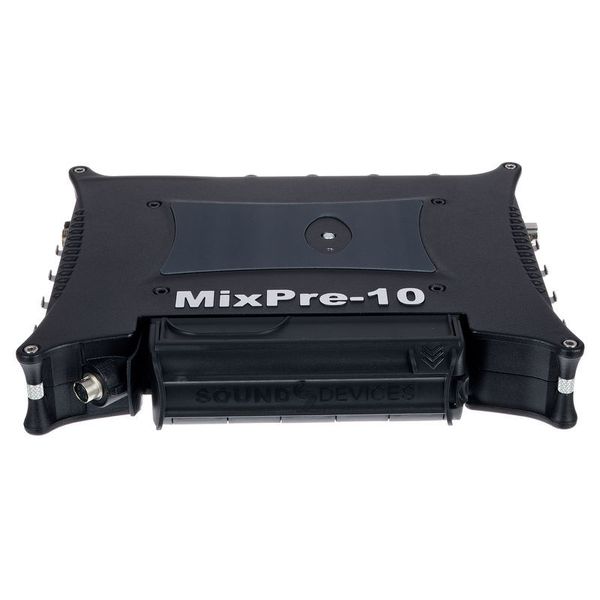


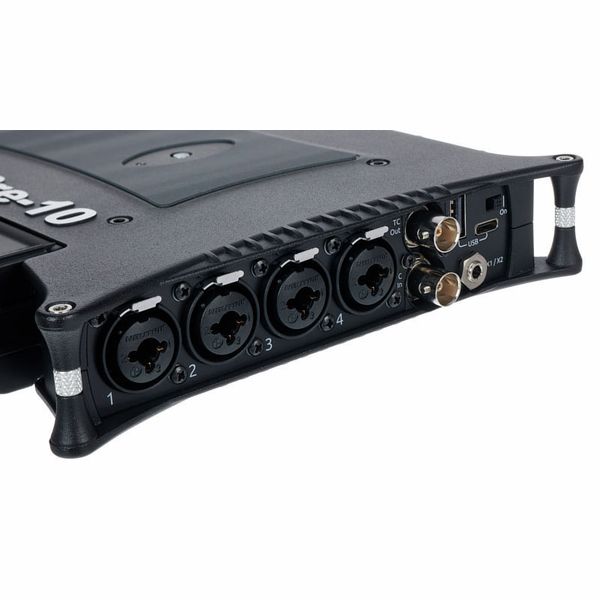

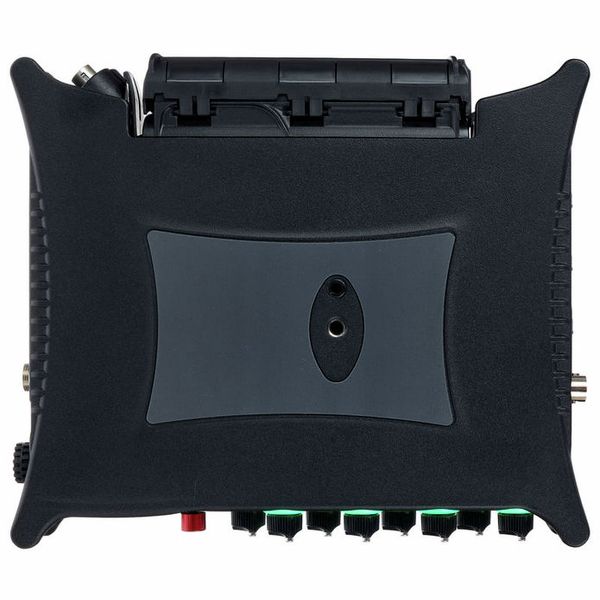

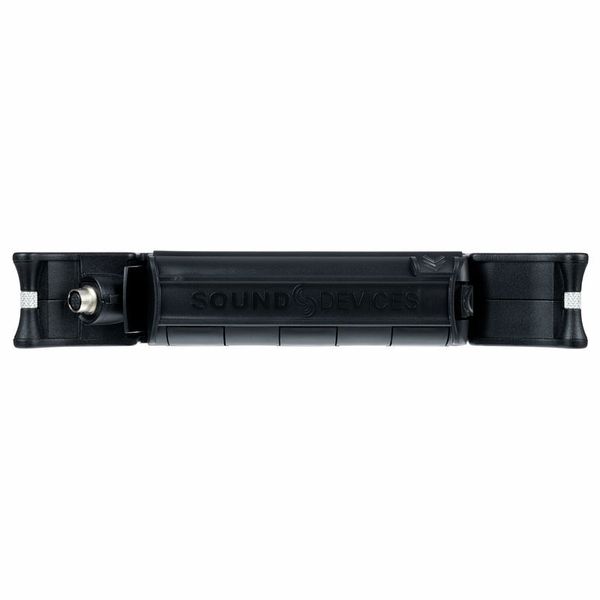
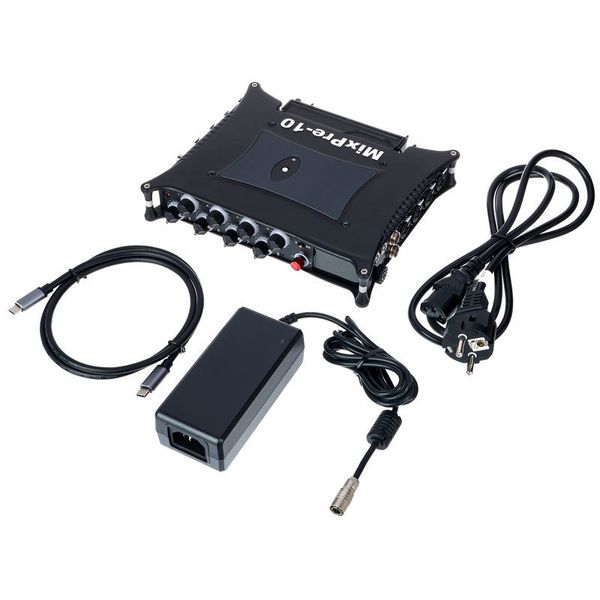


Portable audio recorder with USB audio interface
- 12 Tracks: Stereo mix + 10 single inputs
- Recordings with maximum 32-bit float / 192 kHz
- Dynamic range: 142 dB (A weighted, gain = 10 dB, fader = 0 dB)
- Kashmir microphone preamplifier with 76 db gain
- Noise: -128 dBu max (A-weighting, gain = 76 dB, 150 Ohm source impedance)
- Limiter per channel
- Low-cut filter: 40 to 160 Hz adjustable with 18 dB/octave
- 12-in/4-out audio interface (USB-C)
- SD, SDXC or SDHC card recording up to 512 GB
- Timecode input
- Built-in timecode generator
- Word clock
- 8 Mic/Line Combo Inputs
- Stereo aux/mic input with 3.5 mm jack
- 48 V Phantom power
- +18 dBu TA3 outputs (main out), 3.5 mm X1/X2
- Headphone output
- Power supply with 8x AA batteries or mains adapter
- Free Wingman app for remote control of the MixPre II series
- Includes MX-8AA battery case and XL-WPH3 power supply unit
- Dimensions (H x W x D): 36 x 206 x 175 mm
- Weight: 0.91 kg (without batteries)
- Suitable case: Article Nr. 484640 (not included)
-
Available since September 2019
-
Item number 473243
-
Sales Unit 1 piece(s)
-
Integrated Stereo Microhone No
-
Recording Tracks 12
-
Microphone Inputs 8
-
48 V Phantom power Yes
-
Line Inputs 8
-
Storage Medium SD/SDHC/SDXC
-
Headphone connection Yes
-
Integrated Speaker No
-
Resolution max. 32 bit
-
Max. Sample Rate 192 kHz
-
Limiter Yes
-
Max. Memory 512
-
Recording Format WAV
-
Power Feed Power Supply, Battery
-
Dimensions 36 x 206 x 175 mm
-
Weight 910 g
-
Included In Delivery MX-8AA Battery Box, Power Supply
-


A 32-bit float recorder!
The Sound Devices MixPre-10 II combines a multitrack field recorder, audio mixer, and USB-C audio interface in a compact, portable design, making it suitable for a wide range of mobile recording applications. It can capture true 32-bit floating-point recordings and stream them directly to a computer via USB-C, while processing up to 12 channels simultaneously through its ten analogue inputs, eight Kashmir microphone preamps, stereo Aux/Line input, and stereo mix bus, with recordings saved to SD, SDHC, or SDXC cards. What makes the MixPre-10 II particularly versatile is its support for optional plugins, which allow its functionality to be adapted to different applications without changing the basic hardware. These include a Musician plugin that turns the unit into a compact mobile DAW, an Ambisonics plugin, a background-noise suppression option for location recording, and MixAssist, which can automatically balance microphone levels in multi-person podcast recordings.

Mountain, desert, or forest
The Sound Devices MixPre-10 II supports recording at sampling rates of up to 192kHz with 32-bit floating-point resolution and can be powered by eight standard AA batteries, making it well suited to mobile recording situations. Its different operating modes allow the recorder to adapt to different levels of experience, with the simplified Basic mode taking care of many settings automatically and producing stereo recordings at 48kHz/24-bit, while Advanced mode provides experienced users with access to the full range of parameters, including 32-bit floating-point recording. Despite its extensive feature set, operation remains straightforward thanks to the touchscreen, a transport joystick, and a side-mounted rotary dial, which provide quick access to the various functions. Bluetooth control is also possible via the Wingman app for Android and iOS, while the USB-A connection allows devices such as a keyboard, MIDI controller or hard drive to be connected, giving the compact recorder an impressive degree of flexibility.

A professional tool, even for beginners
The MixPre-10 II boasts a host of features specifically designed for professional film and TV production: BNC inputs and outputs for timecode or word clock signals, and specialised screw threads for mounting the recorder between the camera and the tripod head; the Allen key required for this is safely stowed behind the battery compartment on the MixPre-10 II. These thoughtful details, together with its broader feature set, make the MixPre-10 II a capable professional tool without making it unnecessarily complicated to use. At the same time, its Basic Mode and optional plugins make it accessible to newcomers and allow the recorder to adapt as their experience and requirements develop.

About Sound Devices
"Sound Devices" was founded in 1998 in Reedsburg and Madison (Wisconsin), by three former Shure employees: Matt Anderson, Jon Tatooles and Jim Koomar. While the focus was initially on high-quality audio and video equipment for film and TV production, now Sound Devices is increasingly catering for musicians as well. The company prides itself in meeting the highest demands for both sound quality and reliability. They claim their products can be used “on the highest mountains, in the deepest desert and in the wettest rain forest” – with no adverse impact on quality. Most people have probably heard audio content recorded with Sound Devices equipment - the Oscar-winning film "LaLaLand" or the TV series "Game Of Thrones" to name a couple!
Indoors and outdoors, loud and quiet
Anyone looking to make high-quality recordings away from a mains power source will find the Sound Devices MixPre-10 II remarkably well suited to the task, particularly in situations where reliable level control is essential. Its 32-bit floating-point recording helps accommodate sudden changes in signal level, allowing users to concentrate more on the performance and surroundings rather than constantly monitoring the meters. The 142dB system dynamic range and up to +76dB of preamp gain also make it a useful choice for demanding applications such as sound-effects recording or capturing quiet natural ambience, where low noise and clean amplification are especially important. With the optional Musician plugin, the recorder can also take on the role of a compact DAW for music production, while the MixAssist plugin provides a practical way for YouTubers and other creators working with several microphones to manage levels automatically and concentrate on their content.

In the spotlight: 32-Bit Float
During analogue-to-digital conversion, the bit depth determines how many discrete dynamic levels are available to represent an audio signal, with 24-bit offering 16,777,216 possible levels. Once those levels are exceeded, the signal can no longer be represented accurately above the 0dBFS limit and is therefore clipped, resulting in digital distortion. With 32-bit floating-point recording, the converter still works with 24 bits of actual audio resolution, but the floating-point format allows the available levels to be distributed across a significantly wider range, theoretically providing a dynamic range of around 1680dB, far beyond the capabilities of human hearing or conventional audio equipment. In practical terms, this means that the AD converter is no longer the limiting factor when recording signals with sudden level peaks, leaving the microphone and its preamp as the main constraints on the system's usable dynamic range.


